
Plumstead Skip Hire: Insurance and Safety for an Insured Rubbish Company
At Plumstead Skip Hire we take safety and insurance seriously. As a professional insured rubbish company, our commitment goes beyond basic compliance: we maintain robust public liability cover, deliver ongoing staff training, supply and enforce the correct personal protective equipment, and operate a clear, repeatable risk assessment process. This page outlines how our insured waste services protect clients, staff and the public while ensuring responsible waste management and secure, insured waste removal.Comprehensive Public Liability Insurance for Waste Operations
Public liability insurance is central to any reputable insured rubbish removal or skip hire operation. Our policy protects clients and the general public against accidental damage, injury or property loss caused by our activities. We ensure our limits meet or exceed industry standards, and we can evidence cover for on-site works, deliveries, collections and skip placement. Choosing an insured waste company means you transfer risk to a carrier with verified cover rather than bearing potential costs from unexpected incidents.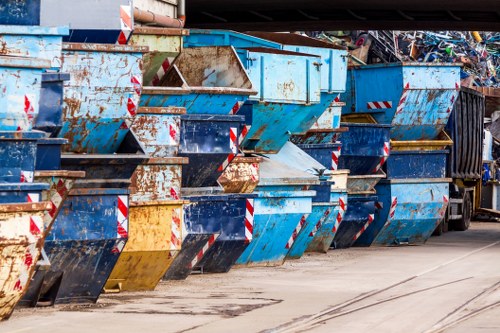 We pride ourselves on transparency: our insurance documentation is current, includes indemnity limits that reflect the scale of our operations, and covers both third-party liability and employer’s liability where applicable. For situations with special risk (e.g., heavy traffic locations or events) our insured skip hire procedures include additional safeguards described below to reduce the likelihood of claims.
Staff Training: Competence and Continuous Improvement
Well-trained staff are the first line of defence against accidents. Our training programme covers manual handling, safe vehicle loading, correct use of securing equipment, and the legal obligations associated with transporting waste. We provide induction training for new hires, refresher sessions for experienced crew, and specific courses for hazardous or mixed waste handling. Training records are maintained and audited to ensure consistency and compliance with regulatory expectations.
Personal Protective Equipment (PPE): Mandatory, Checked and Replaced
All operatives are issued with company-standard PPE including hi-vis jackets, gloves, safety boots, eye protection and, where necessary, respiratory protection. PPE usage is mandatory on all operational tasks: drivers, ground crew and site supervisors must wear appropriate kit at all times. We maintain a replacement schedule and inspect PPE during daily vehicle checks. Supervisors carry responsibility for enforcing PPE policies and for reporting faults or wear so replacements can be supplied without delay.Risk Assessment Process: Systematic, Documented and Proportionate
Our risk assessment process is structured around identification, evaluation and mitigation. Each job begins with a site-specific assessment considering access, pedestrian flow, traffic, underground services and potential hazardous materials. Control measures are recorded and implemented before work begins. Key steps include:- Scoping — Identify hazards and operational constraints.
- Evaluation — Assess likelihood and potential impact.
- Controls — Define physical and procedural measures to reduce risk.
- Communication — Share the risk assessment with staff and any on-site third parties.
- Review — Reassess during or after operations and update controls as needed.
 Vehicle and site safety checks are incorporated into our risk assessment cycle. Every vehicle undergoes pre-shift inspections including braking systems, load restraints and secure tailgate locking. On-site, we use signage, cones and barriers as required, and where necessary implement traffic management plans to separate vehicle movement from pedestrian routes. These measures keep operational incidents to a minimum and support the effectiveness of our public liability cover.
 We audit our risk assessment records regularly: paper and electronic logs are kept for every job to provide traceability. These logs include the named assessor, a summary of identified risks, mitigations applied, PPE used and confirmation that team members were briefed. Keeping accurate records is an essential part of being an insured skip hire and insured waste removal company, because it demonstrates due diligence if any claim or incident is investigated.
Subcontractor management is also part of our safety framework. When third-party contractors are engaged, we verify their insurance status and training credentials, and ensure their working practices align with our safety standards. This protects clients from gaps in cover and helps maintain consistent safety standards across all operations involving insured rubbish services. We check certificates, confirm liability limits and require compliance with our risk control procedures prior to any subcontracted work.
We also operate a culture of reporting and learning. Near-miss events and minor incidents are recorded and reviewed to identify trends and implement improvements. These continuous improvement cycles ensure that our insured waste company not only meets regulatory duties but evolves practices to address emerging hazards. Our commitment to training, PPE and documented risk assessments feeds directly into safer outcomes for every job.
In summary, Plumstead Skip Hire combines solid public liability insurance with practical, enforced safety management to deliver reliable, insured rubbish collection and skip hire. By prioritising staff competence, mandatory PPE, thorough risk assessments and clear subcontractor checks, we minimise risk and demonstrate responsible stewardship of client sites and public spaces. Choosing a properly insured rubbish removal partner gives you protection and peace of mind backed by documented safety systems and a proactive approach to incident prevention.